
Forensic Photo Restoration:
How Restoring Images Helps Uncover the Truth in Court Cases
Have you ever looked at an old, faded photograph and strained your eyes trying to make out a crucial detail?
Now imagine that detail is the deciding factor in a court trial, an insurance dispute, or a contested family estate.
Photos are among the most convincing pieces of evidence in legal proceedings. A single photograph can establish who was present, prove property boundaries, or verify physical damage. However, time, water, sunlight, and poor handling can take a heavy toll. When an essential photograph is torn, discoloured, or badly degraded, justice can stall.
This is where forensic photo restoration steps in.
Below, we explain what forensic image restoration is, how it works in plain English, and how Photo Restoration Rescue helps clients across Melbourne and Australia prepare visual evidence for official scrutiny.
What Is Forensic Photo Restoration?
In standard restoration, the goal is purely aesthetic: to make an old family portrait look vibrant, clean, and ready to frame.
Forensic photo restoration, on the other hand, is the scientific and methodical process of repairing, enhancing, and clarifying an image specifically for investigative or legal purposes.
The goal here isn’t to make the picture look “pretty.” The goal is to reveal truth while preserving integrity.
When you need to repair damaged photos for a legal dispute, every pixel matters. A professional restorer works within strict limits:
Enhancing contrast, sharpness, and brightness to uncover hidden details.
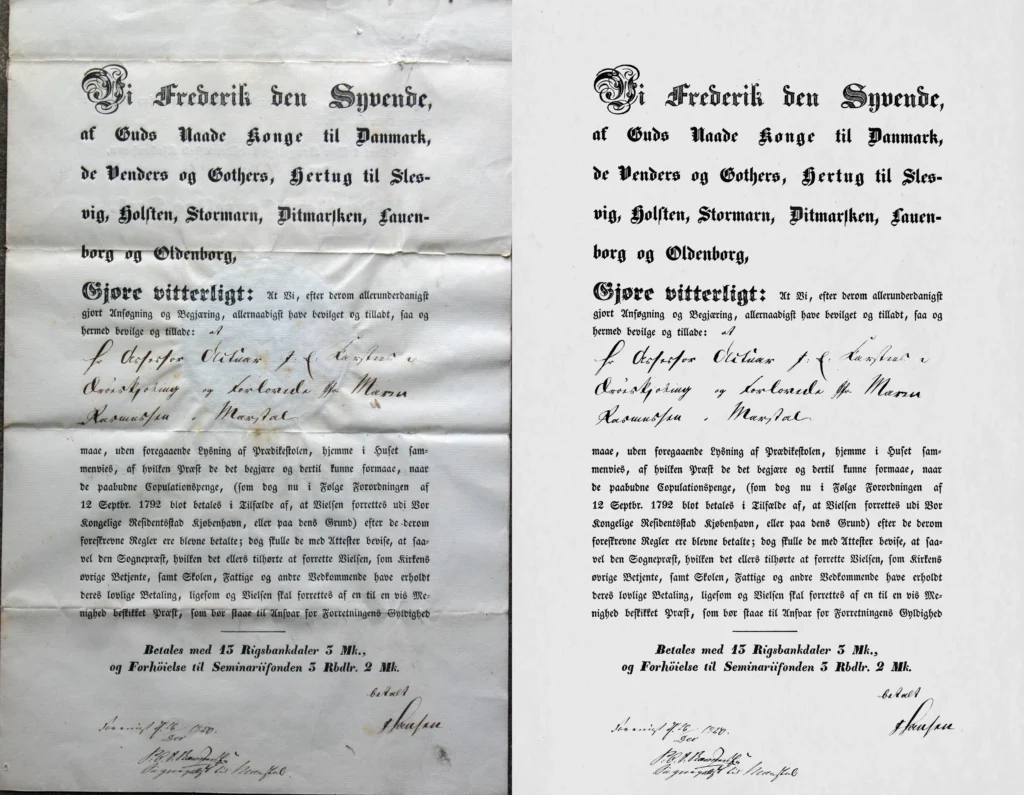
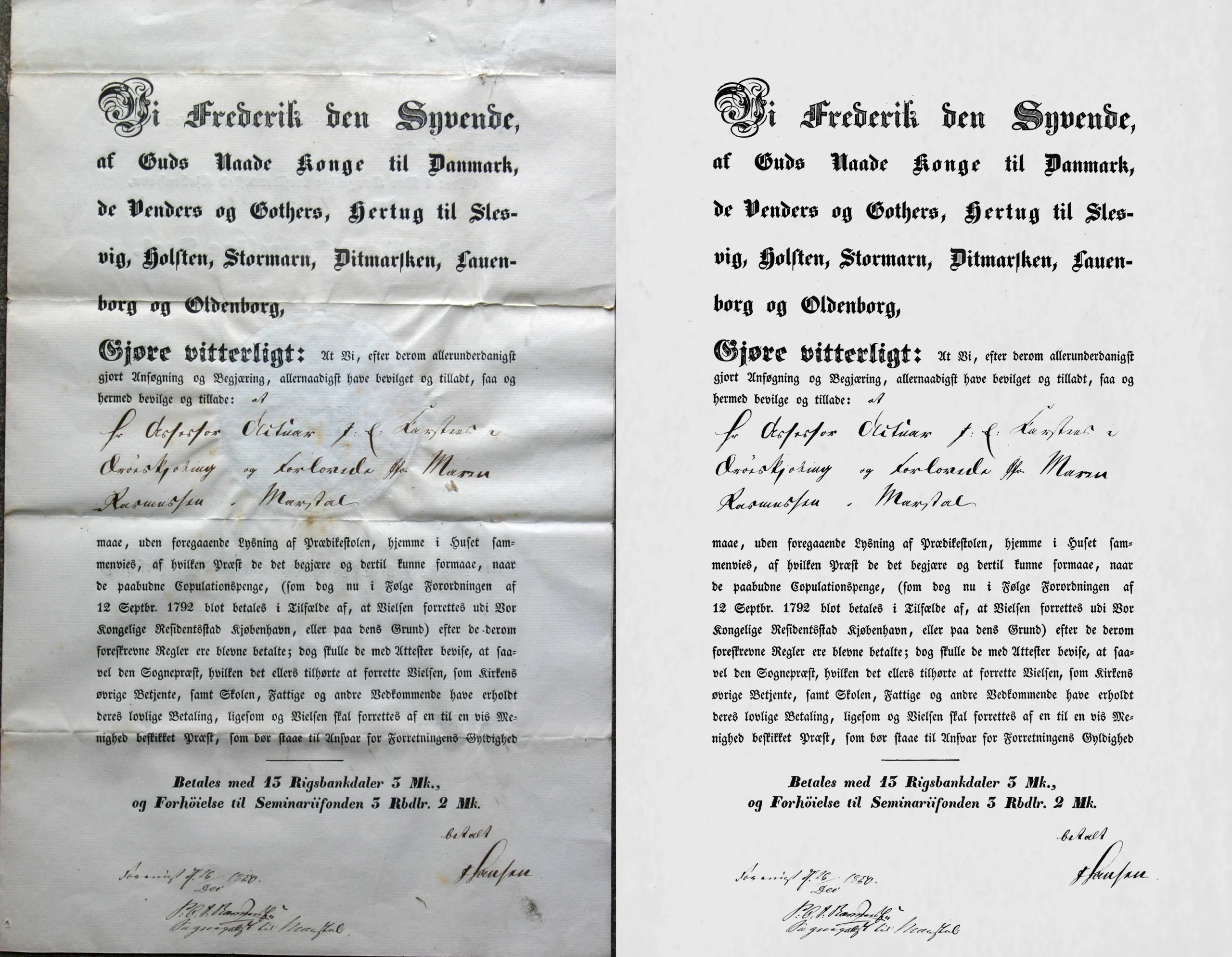
Removing digital noise, scratches, watermarks, or physical tears that obscure key information.
Ensuring the underlying evidence is never fabricated or altered.
In forensic work, you cannot guess or invent details. The restoration must reflect what was genuinely captured by the camera lens at that exact moment.
Where Is Restored Photographic Evidence Used?
You don’t have to be involved in a high-profile criminal case to need forensic image clarification. In Australia, restored images are routinely used across a wide variety of legal and administrative matters:
1. Estate and Will Disputes
Inheritance cases often depend on historical documentation. We frequently see situations where parties need to repair old photos to verify family relationships, confirm who lived on a property at a specific date, or authenticate faded handwritten signatures on aged legal deeds.
2. Property Boundary and Council Disputes
Boundary conflicts between neighbours or local councils can stretch back decades. Historical aerial shots or old photographs showing the original placement of fences, trees, sheds, or access lanes can decide a case. Restoring faded, water-damaged prints can bring these critical boundary markers back into clear view.
3. Insurance Claims
When property, vehicles, or personal assets suffer damage, early evidence is sometimes captured poorly—such as a blurry smartphone snapshot or an old print scanned incorrectly. Professional enhancement clarifies serial numbers, structural cracks, pre-existing conditions, or watermarks needed to settle contested claims.
4. Criminal and Civil Litigation
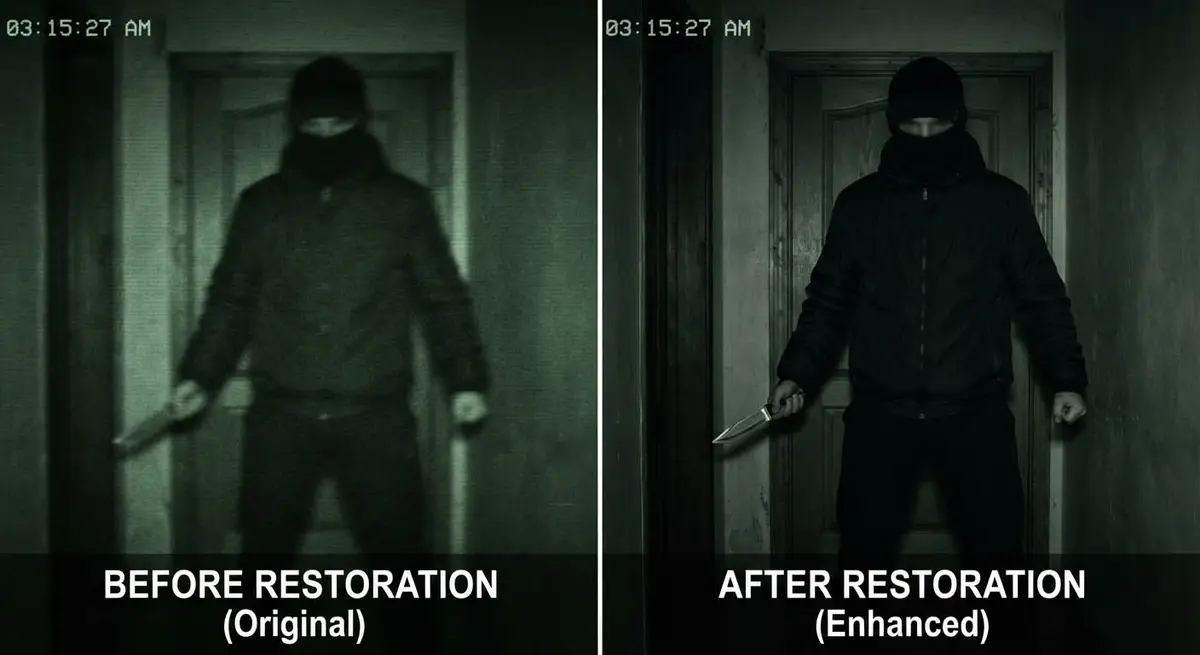
From clarifying surveillance stills to repairing damaged physical photographs collected from a crime scene, forensic enhancement helps legal teams, investigators, and juries see what the naked eye missed.
Free Photo Prints with Every Photo Restoration
Take Advantage of Our Exclusive Offer! When you use our photo restoration service, you’ll receive a free print of each restored image. Don’t miss this opportunity to revive your cherished memories with a stunning, high-quality print at no additional cost. Act now and book your restoration service!
The Golden Rule: Clarification vs. Alteration
A common question we receive at Photo Restoration Rescue is:
“Will a restored photo still be admissible as evidence in an Australian court?”
In legal terms, evidence must be authentic, reliable, and verifiable.
If a photo is altered carelessly, such as using unchecked automated “AI face generators” that guess what missing features look like, it can be thrown out of court immediately for tampering.
Professional, court-ready restoration follows three essential principles:
Non-Destructive Work: The original digital master file is never overwritten. Every adjustment is made on a duplicate working layer.
Audit Trails: Every step, from contrast adjustment to scratch removal, is documented so the method can be explained if challenged by opposing counsel.
Restoration, Not Creation: We remove physical damage (tears, mould, fading) and sharpen existing data, but we never “paint in” evidence that wasn’t there in the first place.

What Types of Damage Can Be Repaired?
Even photos that look completely ruined can often be salvaged with the right techniques. Common challenges we address include:
Sun Fading & Discolouration: Bringing back vanished details in prints exposed to UV light.
Water and Moisture Stains: Neutralising waterlines, mildew spots, and surface bubbling.
Tears, Creases, and Missing Chunks: Digitally re-aligning cracked or torn prints to reconstruct the complete scene.
Chemical Staining & Acid Burn: Repairing yellowing caused by adhesive tape, glue, or acidic photo albums.
Blur and Poor Exposure: Balancing underexposed (too dark) or overexposed (too bright) shots to recover facial features or identifying text.
Experience Photo Restoration Excellence Proofs provided — your feedback shapes the final.
Allow our experts to restore your damaged photos with precision and care - satisfaction guaranteed!
Proofs and tweaks included — no surprises, just satisfaction.
It's Simpler Than You Think
1.Get Free Quote
2 Place Your Order
3. Receive Restored Photo
Why Choose a Professional Photo Restorer in Melbourne?
If you are searching online for “photo restoration near me” or “photo restoration Melbourne”, you will likely find plenty of cheap mobile apps promising instant results.
While automated apps are fine for fixing a quick holiday snap on social media, they are unsuitable for formal evidence. Automatic filters often smooth away vital textures or hallucinate details that do not exist, compromising the photo’s validity.
At Photo Restoration Rescue, we combine digital artistry with meticulous technical standards. Whether you are an individual handling a probate matter, a business owner dealing with liability claims, or a solicitor preparing an evidence brief, we treat your critical images with confidentiality, precision, and care.
Because we are based locally, you don’t have to send your irreplaceable original photographs overseas or trust them to automated black-box software.
Quick Summary (Key Takeaways)
Forensic restoration focuses on clarifying photographic evidence without inventing or altering facts.
It is widely used in Melbourne courts and tribunals for estate disputes, property lines, insurance claims, and historical legal verification.
Automated AI tools should not be used for legal evidence because they fabricate missing pixels rather than uncovering original data.
A certified professional photo restoration service ensures full transparency, confidentiality, and preservation of the original image’s authenticity.
Need Photographic Evidence Restored or Clarified?
If you have an old, faded, or damaged photograph that could make or break an important legal matter, don’t leave the outcome to chance.
Visit Photo Restoration Rescue today to discuss your project. Simply send us a scan or contact our team to find out how our Melbourne-based photo restoration specialists can help you recover the details that matter most.
AI tools are fun for quick edits, but they can’t replace the care, skill, and discernment of a trained restorer. When your memories matter, accuracy matters.
Your photos deserve more than a filter. They deserve craftsmanship.
If you’re in Melbourne and have a precious photo that deserves proper restoration, we would love to help.
Your story matters. Let’s preserve it beautifully.
Frequently Asked Questions: Forensic Photo Restoration
Can a restored photo be used as legal evidence in Australia?
Yes, provided the restoration uses verifiable, non-destructive methods. The original digital master must be preserved, and no pixels, faces, or objects can be invented or fabricated.
What is the difference between cosmetic and forensic photo restoration?
Cosmetic restoration focuses on making an image look visually appealing and clean. Forensic restoration prioritises factual accuracy, revealing hidden details without modifying truth or adding non-existent elements.
Why can't I use automated AI enhancement apps for court evidence?
Automated AI apps use predictive algorithms that "hallucinate" and invent missing pixels. In a legal setting, this can be deemed evidence tampering and lead to the photo being dismissed by the court.
How do you prove a restored photograph has not been tampered with?
Through documented audit trails and non-destructive editing. Every adjustment (such as contrast clarification or tear removal) is recorded on separate digital layers alongside the untouched original file.
Do I need to hand over my original physical photograph?
Usually no. A high-resolution, uncompressed digital scan (typically 600 to 1200 DPI in TIFF format) is sufficient to perform forensic-grade restoration while keeping your original safely in your possession.
Where can I get forensic photo restoration in Melbourne?
Photo Restoration Rescue provides professional, court-compliant photo restoration across Melbourne and Australia, ensuring your sensitive visual evidence is handled with confidentiality and precision.