
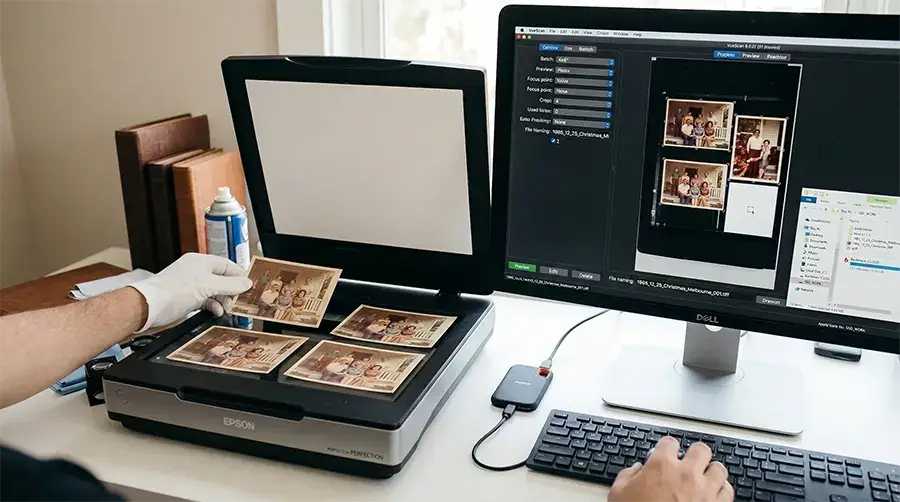
The Photo Detective Guide:
How to Date, Research, and Accurately Colourise Mystery Family Photos
Almost every family has one: a shoe box or album filled with vintage black-and-white photographs featuring forgotten faces. There are no names written on the back, no dates in the margin, and no one left to ask who is standing on that sunlit Melbourne street corner from nearly a century ago.
When faced with a mystery photo, it is tempting to run it through a quick one-click AI app to colourise it. But without knowing when the photo was taken, AI tools frequently guess, turning 1910s wool suits into neon jackets or painting WWI Australian military uniforms the wrong shade of blue.
To truly honour your ancestors and restore a photo authentically, you need to play Photo Detective.
Here is our step-by-step guide on how to date, research, and accurately colourise mystery family heirlooms before bringing them back to life.
Below is the photo we will be Investigating

Examine the Physical Format
The physical object is your first and most reliable clue. Different eras produced different materials, sizes, tones, and textures.
Historical Photo Formats & Film Types
A comprehensive reference grid covering major photographic formats, film types, print styles, and physical characteristics used from the 1840s through the late 20th century.
| Era | Format / Film Type | Typical Size / Aspect | Physical Characteristics | Common Use & Context |
|---|---|---|---|---|
| 1840s–1860s | Daguerreotype / Ambrotype | Small plates (5×7cm to 7×9cm) | Reflective metal or glass, extremely sharp detail, stored in velvet-lined cases. | Early studio portraits; wealthy subjects; rare in Australia but present. |
| 1860s–1880s | Carte de Visite (CdV) | 6.5×10cm | Albumen print on card, warm sepia tone, soft contrast, studio imprint. | Victorian calling-card portraits; common in early Australian albums. |
| 1870s–1910s | Cabinet Card | 11×16cm | Thick card, decorative borders, gold-foil logos, embossed typography. | Formal portraits, weddings, family groups; popular in Melbourne studios. |
| 1880s–1920s | Albumen & Early Gelatin Prints | Varied | Warm tone, fine texture, slight yellowing, softer shadows. | Studio portraits, landscapes, architectural photography. |
| 1900s–1930s | Real Photo Postcard (RPPC) | 8.5×13.5cm | Photographic print on postcard stock; stamp box codes (AZO, VELOX). | Mailed portraits, soldiers, rural homesteads, street scenes. |
| 1910s–1940s | Glass Plate Negative | 4×5", 5×7", 8×10" | Glass negatives; extremely sharp; contact printed. | Professional studios, landscapes, commercial photography. |
| 1920s–1960s | Silver Gelatin Print | 3×5", 4×6" | Neutral tone, strong contrast, fibre-based or resin-coated paper. | Family snapshots, studio portraits, school photos. |
| 1930s–1950s | Deckle-Edged Snapshot | 6×9cm | Scalloped borders, neutral tone, slight curl from album storage. | Holiday photos, backyard scenes, wartime snapshots. |
| 1930s–1970s | Roll Film (120 / 620 / 127) | 6×4.5cm, 6×6cm, 6×7cm, 6×9cm | Medium-format negatives; sharper than 35mm; contact prints. | Weddings, portraits, higher-quality family photography. |
| 1930s–1990s | 35mm Film | 24×36mm negatives | Perforated strips; visible grain in enlargements. | Everyday cameras, travel, candid family photography. |
| 1960s–1990s | Colour Negative (C‑41) | 4×6", 5×7" | Warm 70s/80s palette; lab branding on back; resin-coated paper. | Modern family albums, holidays, school photos. |
| 1970s–2000s | Instant Film (Polaroid) | Square or rectangular | Thick white borders; chemical streaks; soft colour shifts. | Casual snapshots, parties, creative photography. |
Tip: Combine format clues (size, tone, edges, backing) with fashion, architecture, vehicles, and studio styles for more accurate dating.
Clothing, Fashion, and Hairstyles
Once you know the format, fashion helps refine the era.
Women’s Fashion
1890s: Leg‑o‑mutton sleeves
1900s: Gibson Girl updos, high lace collars
1920s: Drop‑waist dresses, bobs, cloche hats
1940s: Victory rolls, square shoulders
1950s: Pastels, circle skirts, structured bodices
Men’s Fashion
1880s–1900s: Full beards, stiff collars, bowler hats
1920s: Clean‑shaven, flat caps, double‑breasted suits
1950s: Pompadours, high‑waisted trousers, broad lapels
Background Clues
Architecture, vehicles, and studio props are powerful dating tools.
Cars: Grilles, headlights, licence plates
Street infrastructure: Tram wires, lamp posts, signage
Studio backdrops: Painted Victorian scenes vs plain mid‑century gradients
Use Archives to Confirm Your Guess
Once you have a rough era, cross‑check with:
Trove (studio names, ads, addresses)
State Library Victoria (streetscapes, architecture)
National Archives of Australia (military uniforms, colour patches)
Translate Era Knowledge Into Authentic Colourisation
Once you know the era, you can restore colours accurately.
Victorian / Edwardian (1880s–1910s)
Dark wool suits
Earthy browns, deep greens
Natural hair tones
Subtle makeup (if any)
1920s
Deep crimson lipstick
Black, gold, silver evening wear
Soft pastel day dresses
Cloche hats in navy, tan, black
1940s
Military khaki, navy, olive
Victory roll hairstyles
Practical wartime fabrics
1950s
Pastel greens, butter yellows, coral pinks
Polka dots, gingham, structured dresses
1970s–1990s Colour Prints
Warm, slightly muted tones
Brown, orange, mustard, avocado green
Denim blues, soft reds
🔍 Now Let’s Analyse The Mystery Photo
Using this guide, we can:
identify its format
determine its likely decade
analyse its tonal behaviour
examine fashion, background, and props
confirm clues using archives
restore authentic colours based on era
At Photo Restoration Rescue, we’ve built our own era‑estimation tool to help kick‑start the research process. It scans your photo’s format, tone, and visual characteristics to provide an approximate date range. While it’s not exact, it’s a reliable starting point, and you can test it out right here.
AI Photo Era Detective
Upload any vintage family photograph to uncover when it was taken, what fashion clues give it away, and its historical context.
Drag & drop your vintage photo here
or click to select a file from your computer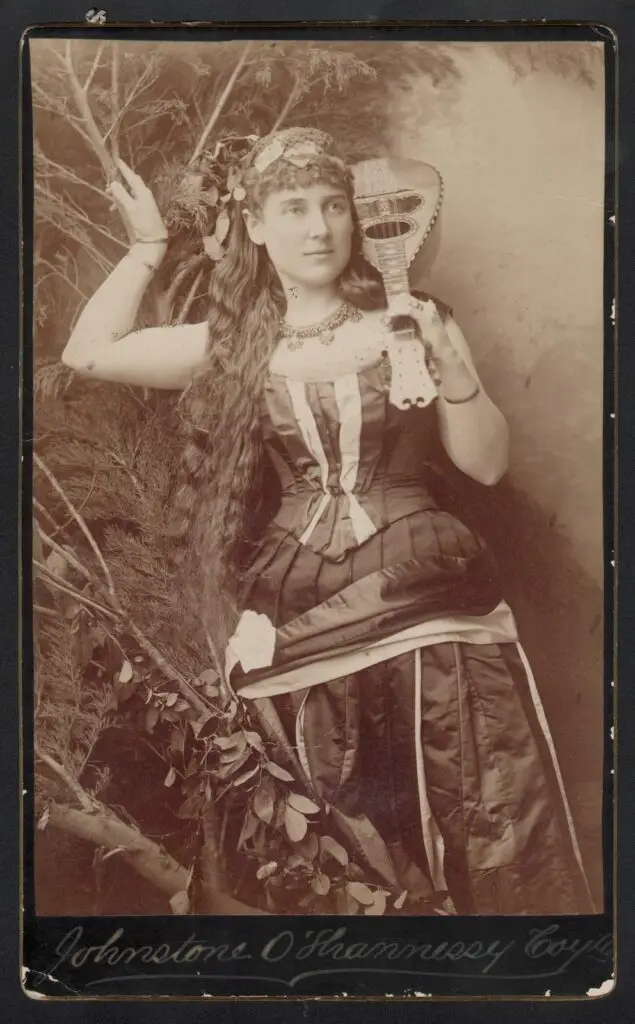
Circa 1885–1893 (Late Victorian Era)
Photographic Medium & Format Clues
- Format: Standard Cabinet Card format (approx. 4.25 × 6.5 inches), which reached peak global popularity between 1880 and 1900 for studio portraiture.
- Mount Design: The heavy, dark cardstock mount featuring elegant metallic gold script printed along the bottom edge (“Johnstone O’Shannessy Coy”) is characteristic of upper-tier studio mounts from the late 1880s to early 1890s. Earlier cabinet cards (1870s) typically favored light cream or white mounts.
- Photographic Process: Sepia-toned silver printing-out paper (P.O.P.) or late albumen print, offering deep contrast, fine detail, and rich shadows typical of late Victorian studio lighting.
- Studio Marking: The photographer, Johnstone, O’Shannessy & Co., was Melbourne, Australia’s preeminent 19th-century photographic studio, highly celebrated for artistic and theatrical portraiture during the Victorian boom era.
Fashion, Clothing & Grooming Clues
- Hairstyle: Tight, curly bangs (“fringe”) brushed over the forehead paired with long, crimped, cascading locks down the back. The curled fringe combined with textured waves was a quintessential trend of the mid-to-late 1880s.
- Costume/Attire: The subject wears a theatrical or “fancy dress” costume—likely representing a Romany/Gypsy, troubadour, or bohemian stage character. Features include a tightly boned corset bodice ending in a sharp V-point, vertical contrasting paneling, sleeveless construction, and a low hip sash over a pleated skirt.
- Jewelry: A short bohemian/Orientalist fringe necklace featuring dangling coin or teardrop elements, accompanied by delicate metal bangles on her wrists and upper arm—styles heavily influenced by the Aesthetic Movement of the 1880s.
Background Objects, Architecture & Technology
- Musical Instrument: A Neapolitan bowl-back mandolin resting over her shoulder. Mandolins enjoyed an immense craze across Western countries in the late 1880s and 1890s following performances by traveling European troupes at major world fairs.
- Studio Prop Staging: Real or realistic artificial evergreen foliage (cedar or pine boughs) integrated with a painted background gradient, simulating an idyllic woodland scene favored in 1880s theatrical studio portraiture.
Historical Context
- Theatrical & Fancy-Dress Portraiture: During the late Victorian era, theatrical performers and society women frequently posed in romanticized, allegorical, or ethnic costumes at high-end studios like Johnstone, O’Shannessy & Co.
- Dating Precision: The combination of the dark mount with gilt script, the crimped fringe hairstyle, the peak popularity of the Neapolitan mandolin, and the corset silhouette tightly narrows the production of this portrait to the late 1880s or very early 1890s.
Experience Photo Restoration Excellence Proofs provided — your feedback shapes the final.
Allow our experts to restore your damaged photos with precision and care - satisfaction guaranteed!
Proofs and tweaks included — no surprises, just satisfaction.
It's Simpler Than You Think
1.Get Free Quote
2 Place Your Order
3. Receive Restored Photo
FAQ (Optimised for AI Overviews & Featured Snippets)
How can I tell what era my old photo is from?
Start by looking at the physical format (card, postcard, print size), the tonal look (sepia vs neutral black‑and‑white), and the clothing, hairstyles, and background details. Combining these clues usually narrows the photo down to a specific decade or era.
What are the most common historical photo formats?
Some of the most common formats include daguerreotypes, ambrotypes, cartes de visite, cabinet cards, real photo postcards, silver gelatin prints, deckle‑edged snapshots, medium‑format roll film, 35mm film, colour negative prints, and instant Polaroid‑style photos.
Why does the physical format of a photo matter?
The format tells you a lot about when and how the photo was made. Card size, edges, backing, paper type, and tone all correspond to specific periods in photographic history, which helps you date the image more accurately.
Can clothing and hairstyles help date a photo?
Yes. Fashion is one of the strongest dating clues. Sleeve shapes, dress silhouettes, hat styles, hair arrangements, and grooming trends all change by decade, making them extremely useful for narrowing down the time period.
How do you decide what colours to use when restoring an old photo?
We first identify the era and context of the photo, then reference historical fashion, military uniforms, cosmetics, and fabric colours from that period. This research guides the colour palette so the restored image looks authentic, not guessed.
Is your photo analysis tool 100% accurate?
No tool can be perfectly accurate, but our custom photo‑analysis process gives a strong starting estimate by examining format, tone, and visual clues. We then refine that estimate manually using historical knowledge and archival research.
Can you help me date and colourise a specific family photo?
Absolutely. You can upload your photo to Photo Restoration Rescue, and we’ll analyse its format, era, and visual details, then restore and colourise it using historically accurate tones tailored to your image.
Will colourising my old photo change its historical authenticity?
When done carefully, colourisation can enhance the story without distorting it. We base our colours on real historical references, so the result respects the original era and the person in the frame.