
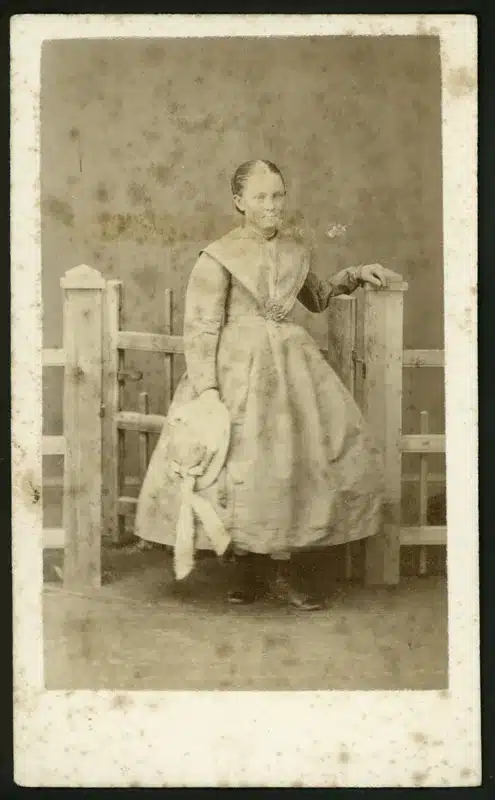
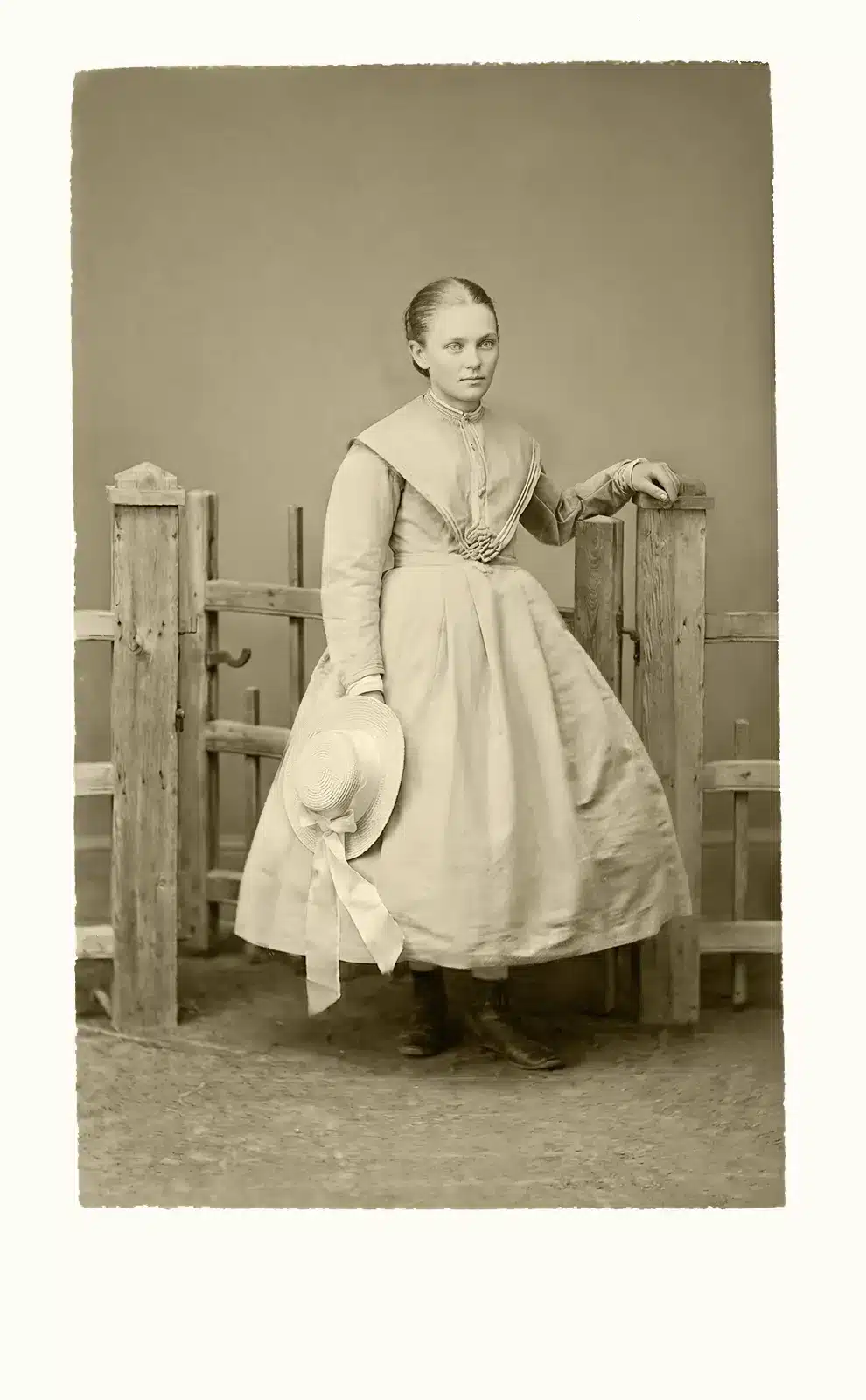
Photo Restoration Of The Month: July
Behind The Photo: A Glimpse into History
Historical Context: Mid-to-Late 1800s Studio Photography
Sepia Toning: Introduced in the 1880s, sepia toning replaced metallic silver in photographic prints with silver sulfide, which was more resistant to fading and environmental damage. The name “sepia” comes from the ink of the cuttlefish Sepia officinalis, historically used as pigment.
Studio Portraiture: By the 1860s–1890s, photography studios had become more accessible to the middle class. Subjects were often posed formally, with props and backdrops that mimicked nature or domestic scenes. The goal was to convey dignity, stability, and social standing.
Fashion Indicators: The wide skirt and fitted bodice suggest Victorian fashion, particularly the styles popular between 1850 and 1870. The presence of a bonnet and the hairstyle further support this timeframe.
Cultural Significance: These portraits were treasured keepsakes, often exchanged among family members or displayed in parlours. They served as visual records of lineage, status, and memory—especially important in an era before widespread photojournalism.
We revive photos, videos, and documents with care, precision, and purpose.
More Than Just Photo Restorations
No format too old. No memory too unique. Videotapes, 8mm reels, slides, photographs